In-between the Lines: Vol. 01
Infinite Images, Finite PresenceWritten by León Plaga In conjunction with Treasures of Dalt Vila
When photography emerged in the nineteenth century, many painters feared it would make painting obsolete.
For centuries, one of art’s central purposes had been representation: to capture likeness, landscape, atmosphere, history. Suddenly, a machine could produce visual accuracy faster and more precisely than any human hand.
But instead of disappearing, painting transformed.
Freed from the obligation of perfect representation, artists began exploring what photography could not yet fully capture: sensation, perception, movement, emotion, light. Impressionism emerged not as a rejection of technology, but as a response to it. Painting became less about recording reality and more about experiencing it.
Today, we may be living through a similar shift.
The contemporary world is saturated with images. Social media has created an endless visual stream; immediate, polished, optimized for speed and attention. At the same time, AI can now generate imagery instantly in almost any imaginable style. Images have become frictionless.
And perhaps because of this, the image itself is beginning to lose rarity.
What becomes valuable when visual production is infinite?
Increasingly, it is the things that cannot be fully transmitted digitally: texture, scale, tactility, material presence, weight, imperfection, atmosphere. Contemporary art appears to be moving away from purely optical experience toward something slower and more physical.
This shift becomes especially visible when standing in front of works that resist flattening into documentation.
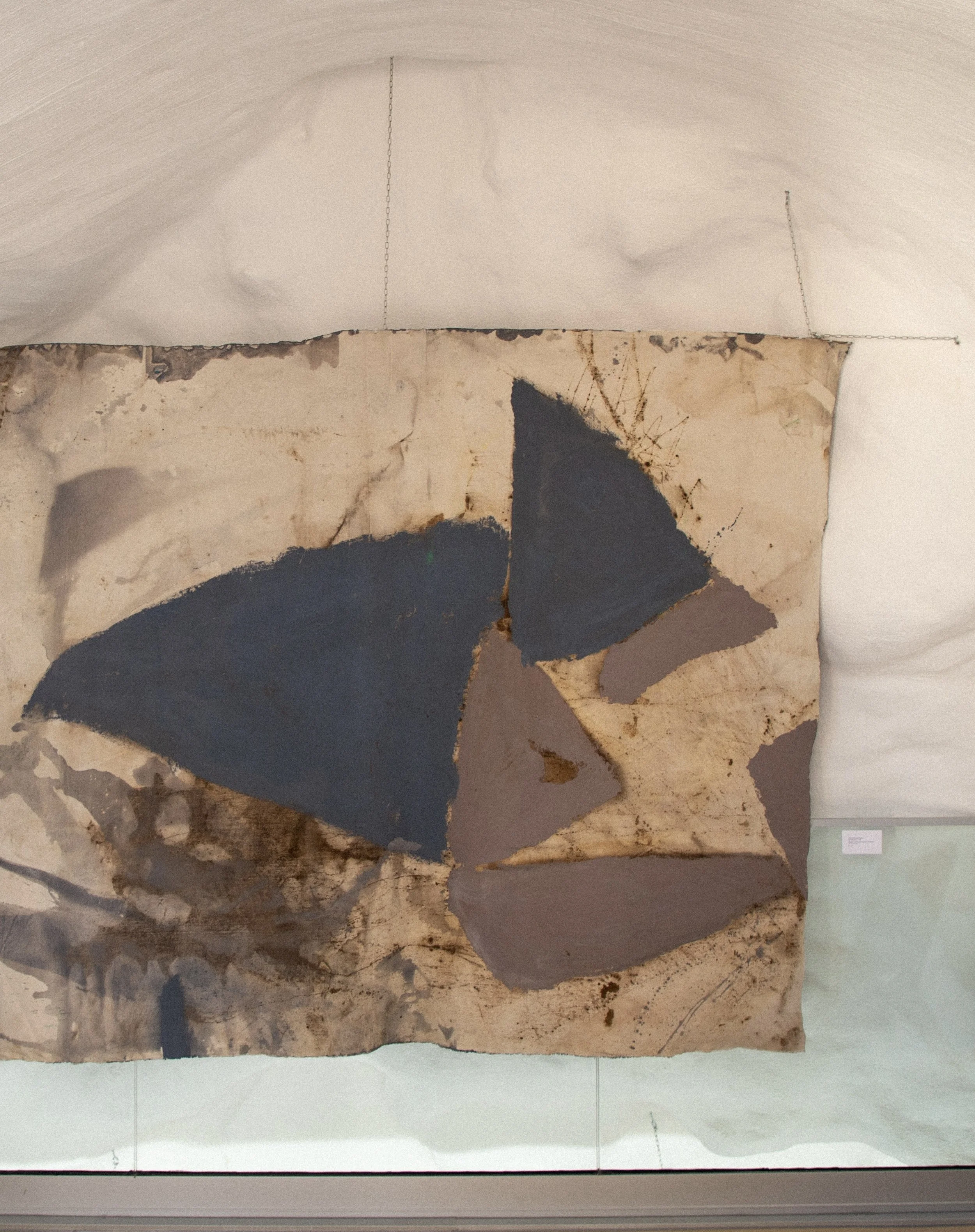
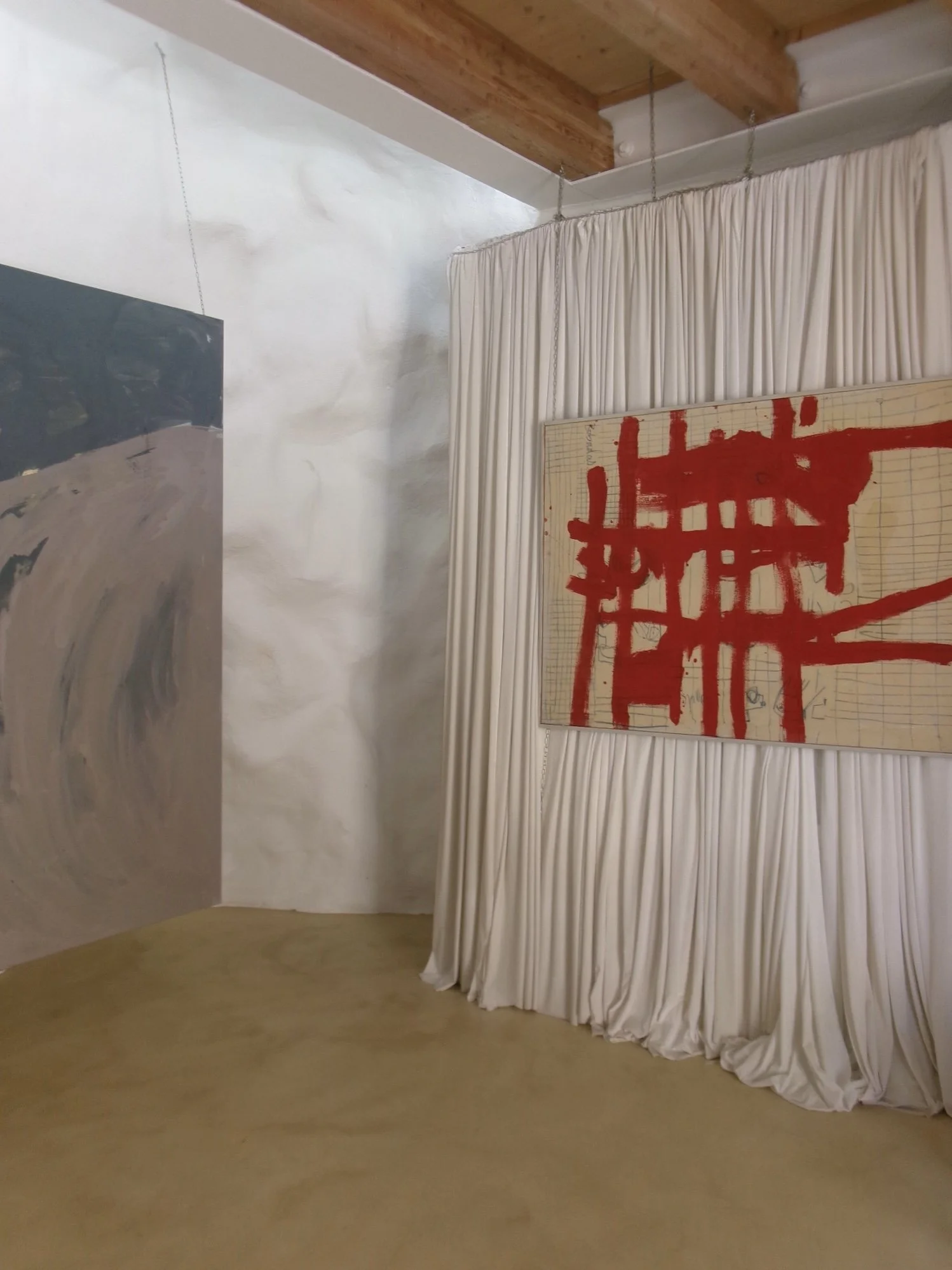
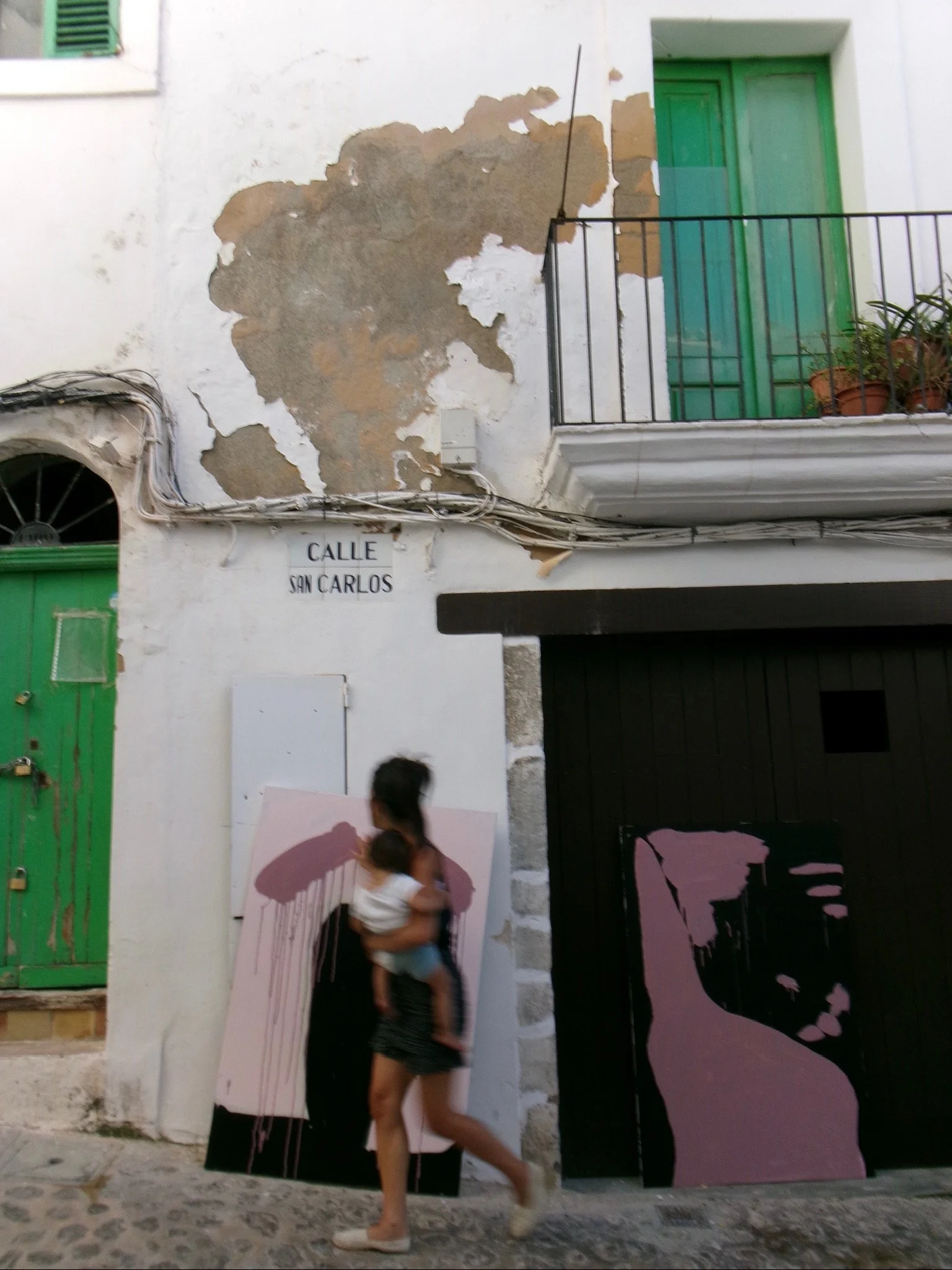
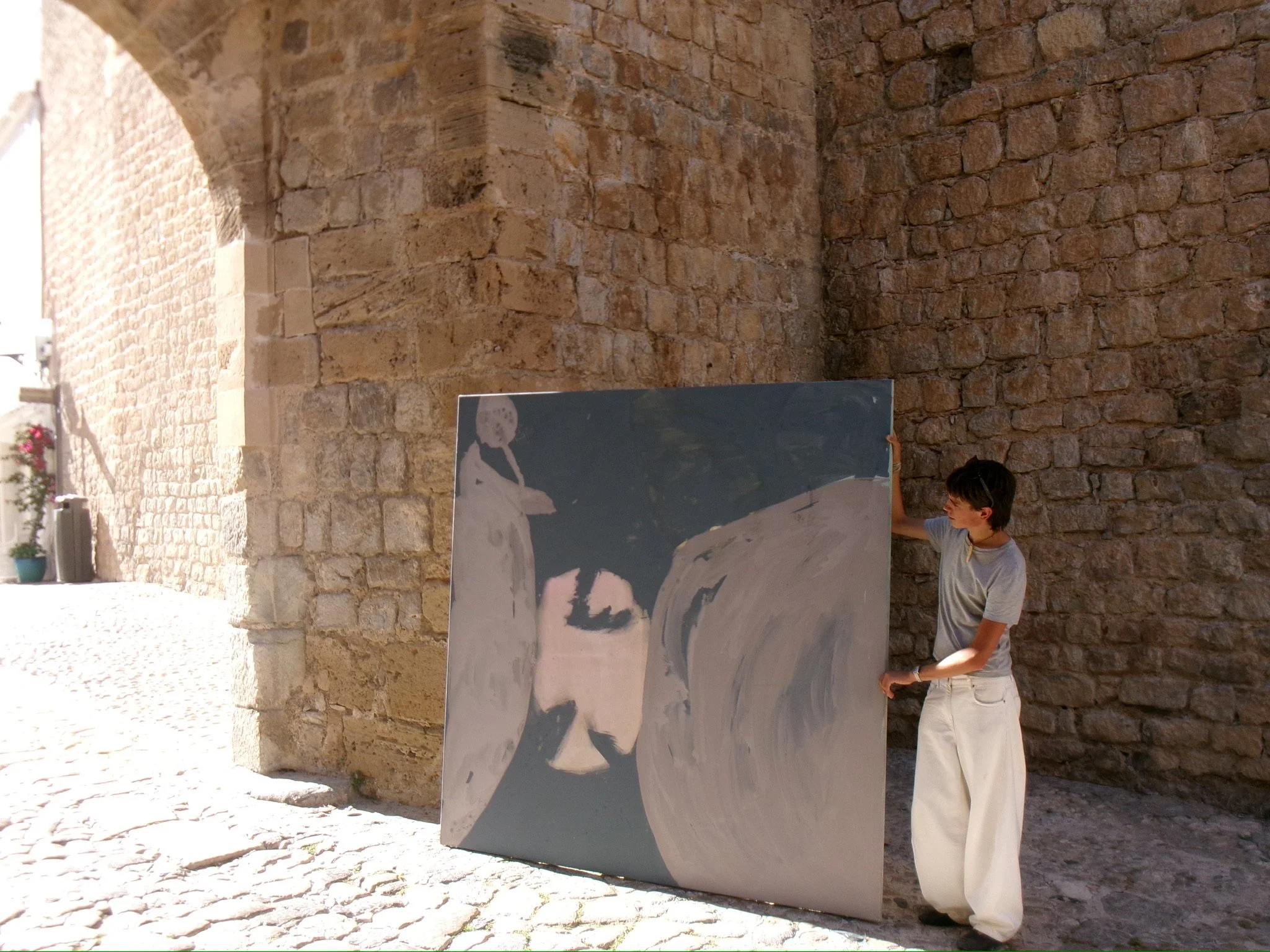
The paintings of Malvina Kang Hughes, for example, carry a presence that changes entirely in person. Working often in large scale with mineral paint and natural pigments, her surfaces absorb and reflect light differently throughout the day. In works such as “Juxtaposition”, hung unframed directly from the ceiling, the canvas exists less as a contained image and more as an object within space itself. The unframed presentation, increasingly visible across contemporary galleries and art fairs, exposes the raw edge of the material, emphasizing process, surface, and physicality over polished completion, and shifting shapes together with breeze, humidity and atmosphere.
The works refuse the sealed perfection of the digital image.
Similarly, the paintings of Chloë Phoebe and Jenna Bitar reveal themselves slowly through light and proximity. Their use of natural pigments, layered textures, raw cotton, earth tones and organic materials creates surfaces that are difficult to fully register through a screen. The works shift depending on shadow, architecture, surrounding objects, and the movement of the viewer. Documentation captures composition, but not experience.
In many ways, these works insist on being encountered physically.
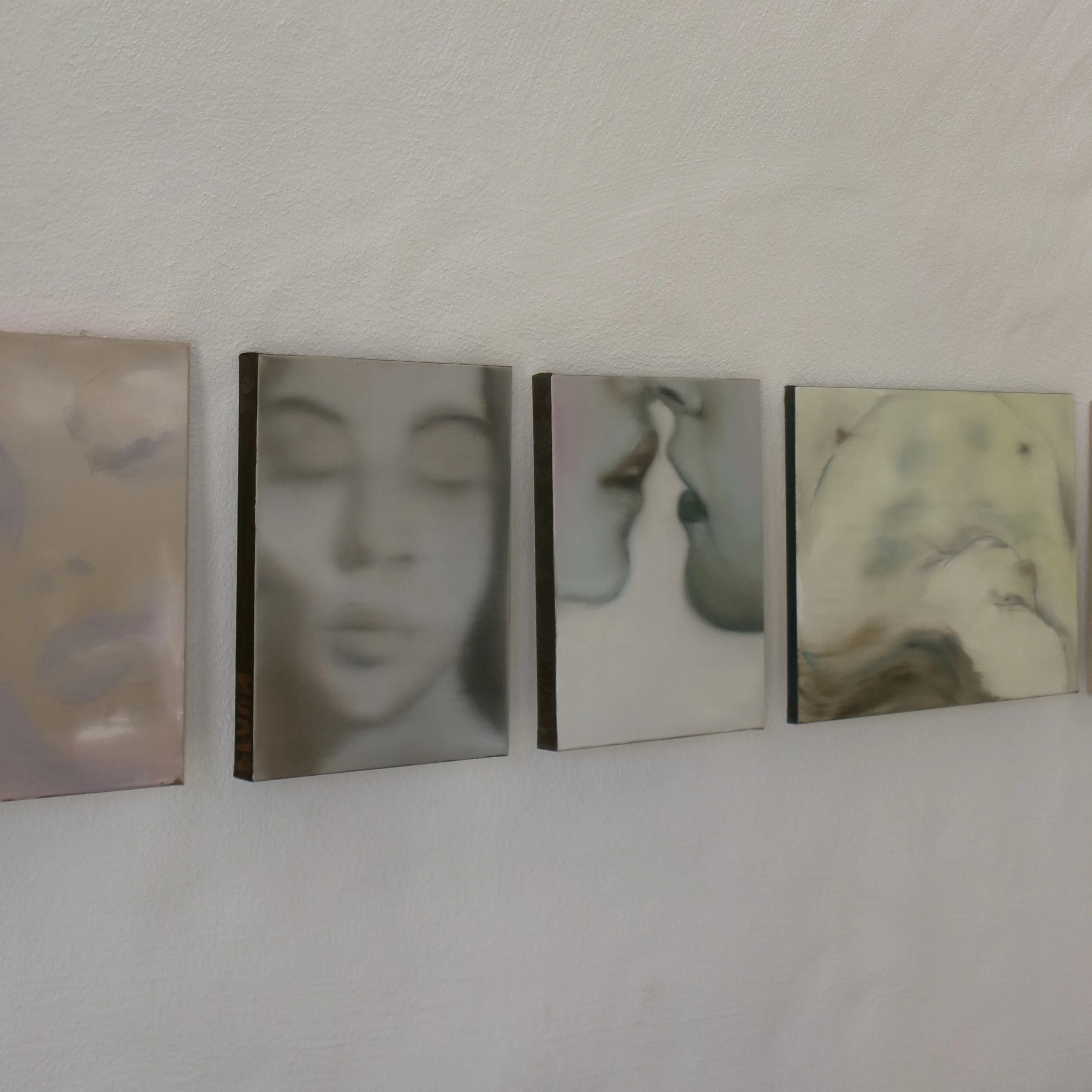
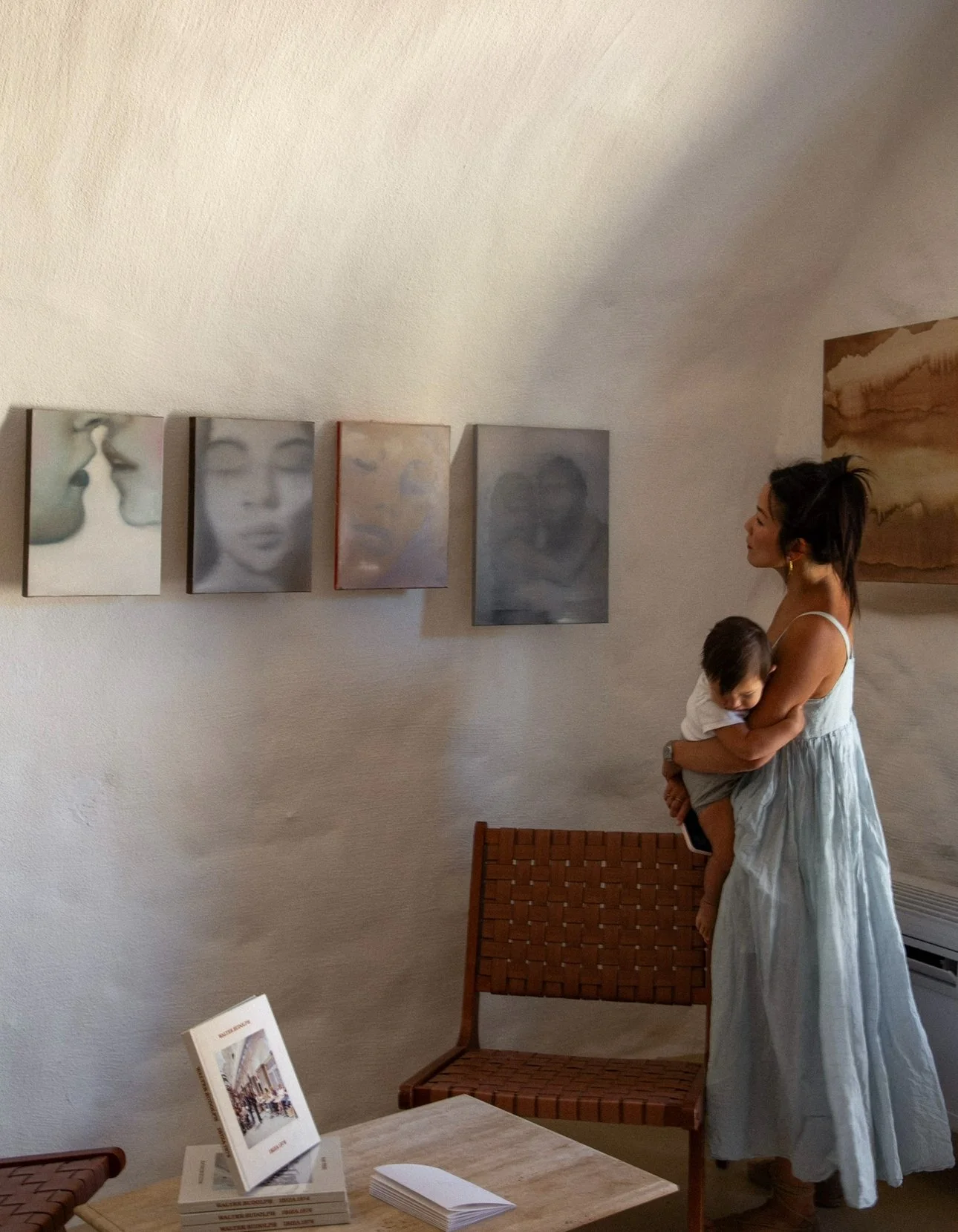
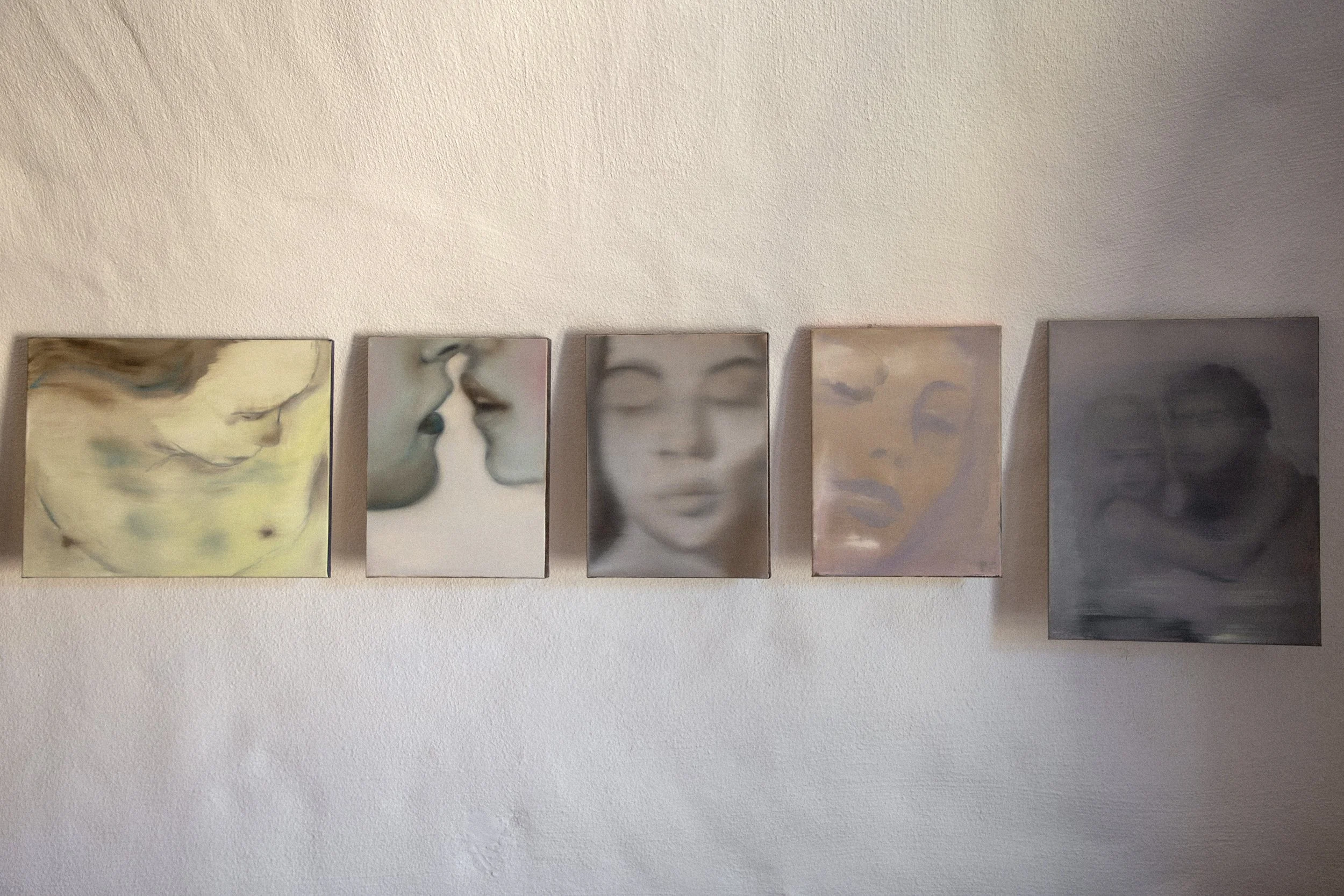
The paintings of Poppy Faun operate differently, yet arrive at a similar place emotionally. Her blurred figures and softened imagery resemble distant memories rather than fixed scenes, resisting the hyper-clarity that dominates contemporary visual culture. They feel half-remembered, unstable, atmospheric. In a digital environment obsessed with sharpness and instant readability, ambiguity itself begins to feel refreshing.
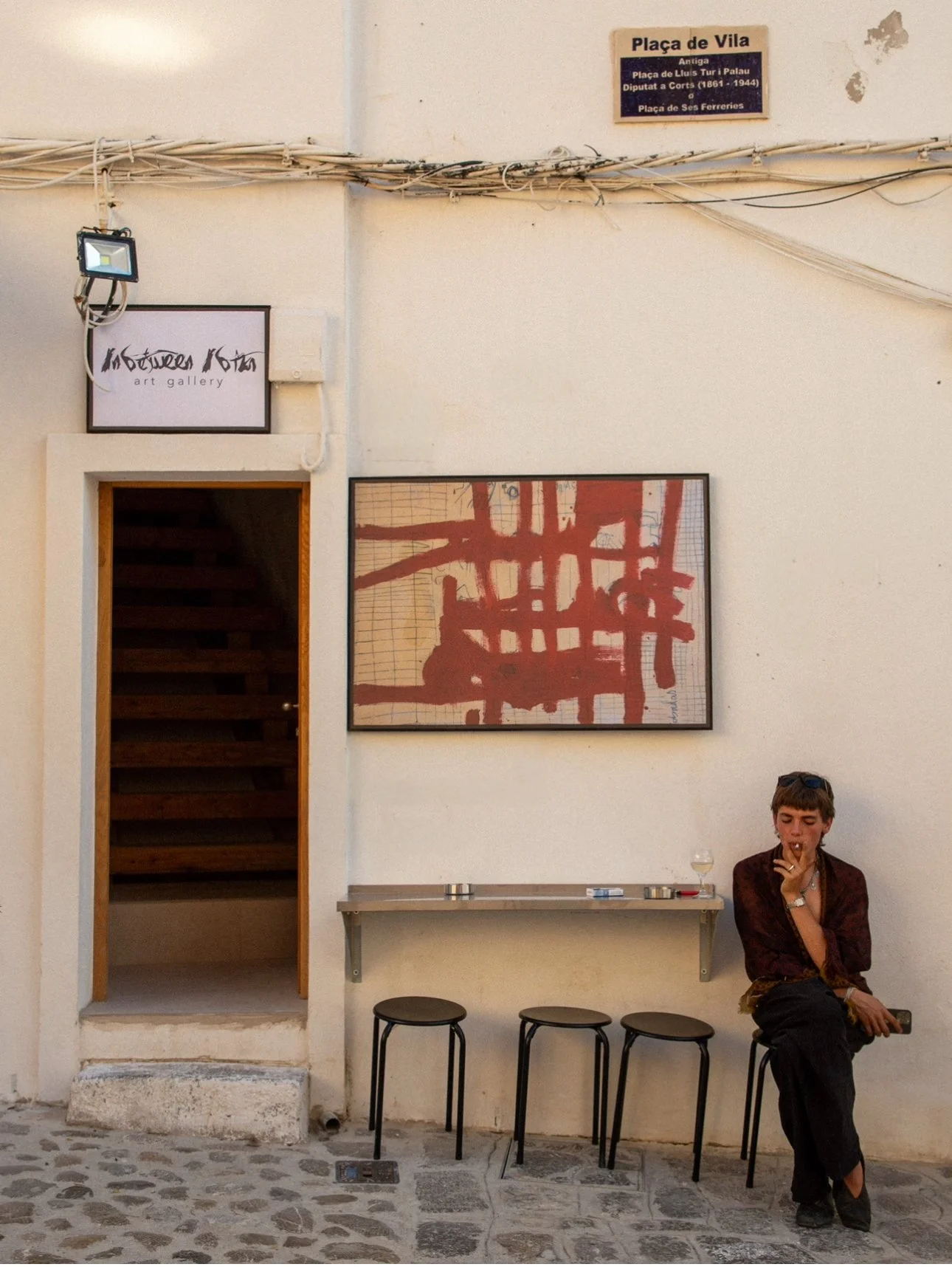
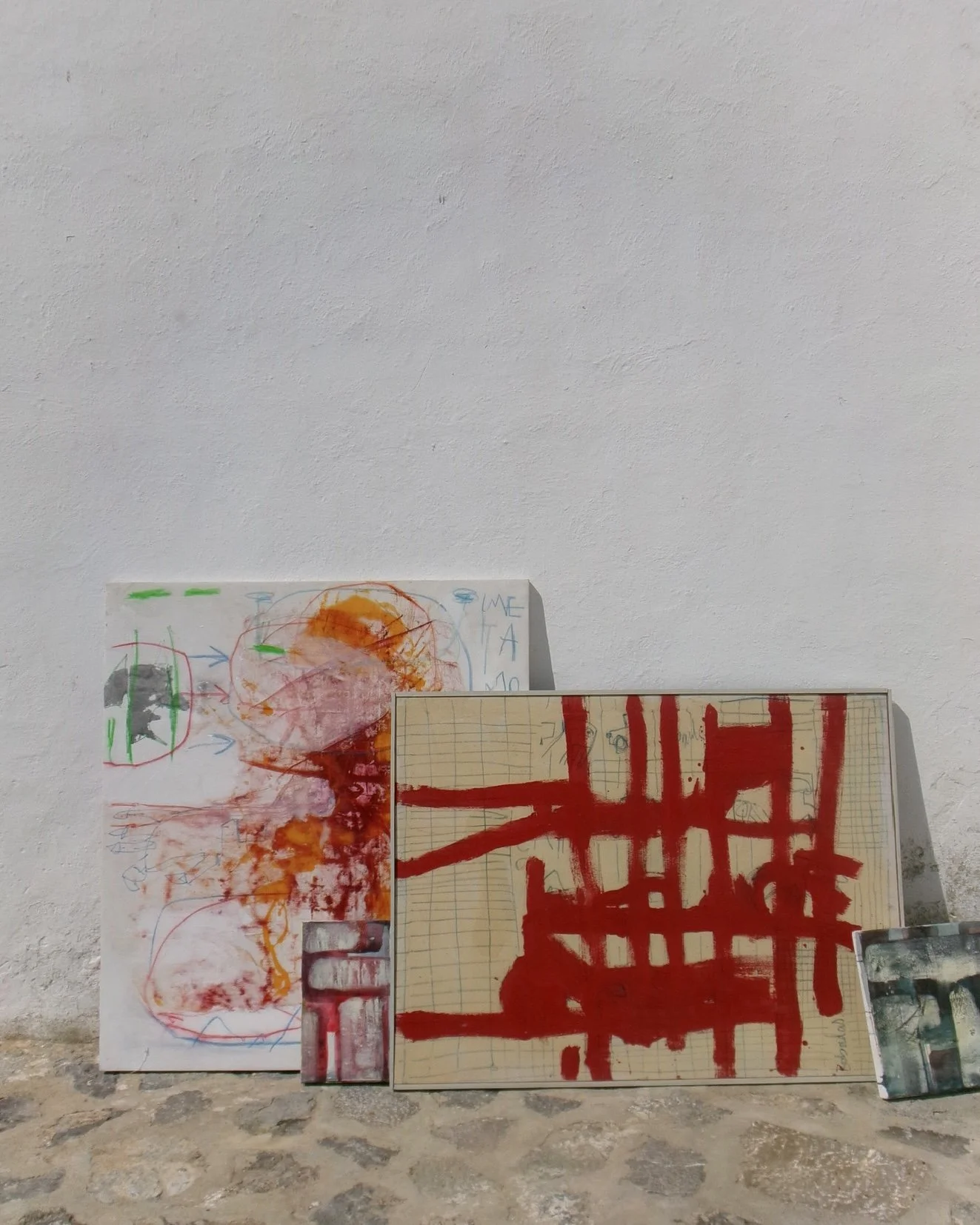
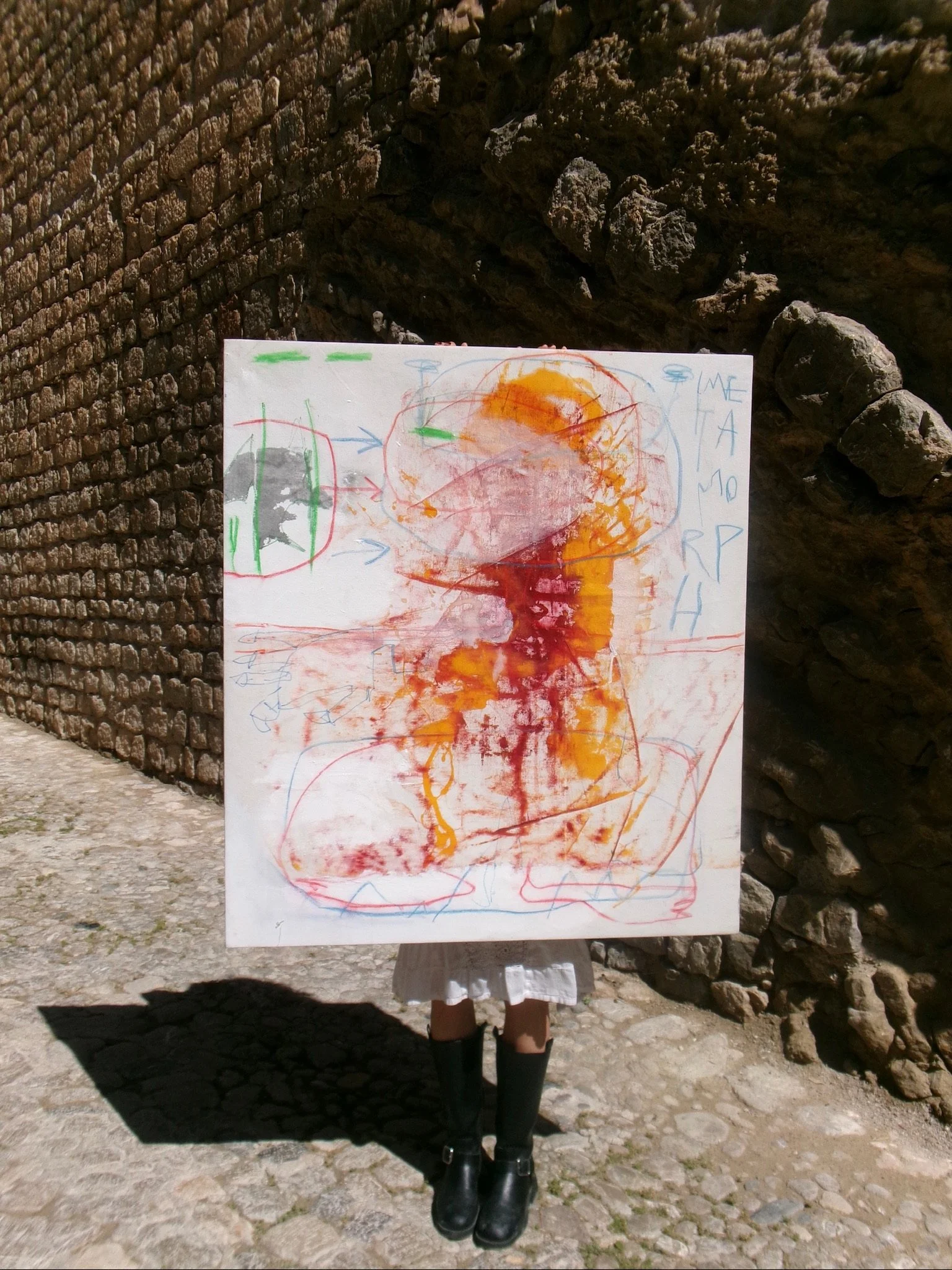
Meanwhile, Jesús de Miguel pushes materiality into something far more visceral. Across gestural abstraction, graffiti-like marks, latex surfaces, and heavily textured compositions, his works produce physical encounters that cannot be translated digitally with accuracy. Certain textures only emerge through changing light or close inspection. The works carry surprise, friction, unpredictability; qualities increasingly absent from computer optimized imagery.
This may be where contemporary art is heading.
Not away from technology, but toward the human experiences technology struggles to replicate.
The Impressionists responded to photography by painting light, movement, and fleeting perception. Today’s artists may be responding to AI and image saturation by returning to materiality, tactility, scale, erosion, gesture, and presence. The artwork is no longer only an image to consume, but an experience to inhabit.
Perhaps this explains the renewed attraction toward raw linen, woven surfaces, mineral pigments, clay, oxidized textures, visible process, and imperfect forms. These materials carry time differently. They record pressure, atmosphere, gesture and touch. They remind us that an artwork is not only something to be seen, but something that has physically existed in the world.
And in an age where almost every image can be generated, manipulated, filtered, or endlessly reproduced, presence itself begins to feel rare again.