
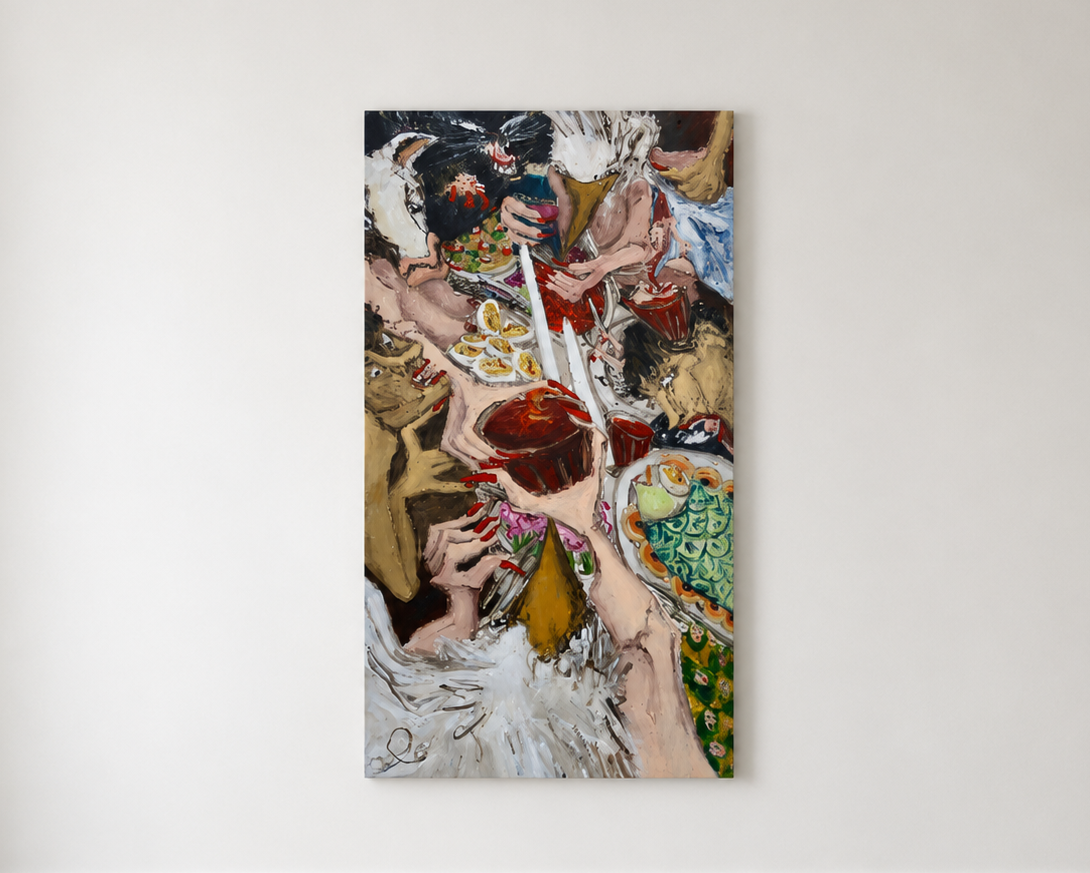
Mia Wilkinson Mia Wilkinson’s paintings dismantle the mythology of the perfect home. Drawing on the visual language of food, ornament and decoration, she constructs psychologically charged interiors inhabited by unruly women, animals and recurring motifs that oscillate between humour, excess and desire. Richly layered surfaces seduce the viewer before revealing the contradictions embedded within domestic life, where pleasure and labour, beauty and discomfort, coexist.
Raised in a working-class household in the North East of England, Wilkinson’s practice is shaped by questions of class, gender and identity. Growing up within a female-led family while remaining disconnected from her Asian paternal heritage has informed an ongoing interest in the ways identity is inherited, performed and negotiated. Rather than illustrating autobiography, her paintings transform lived experience into theatrical worlds that challenge idealised notions of femininity, respectability and the domestic.
Working across painting and sculpture, Wilkinson draws on the grotesque, caricature and the history of figurative painting to reimagine the home as a site of performance, resistance and reinvention. Increasingly placing herself within these worlds, she uses self-representation to question who is permitted to look, who is expected to perform, and how pleasure itself can become an act of defiance.
Enquire about Mia's artwork 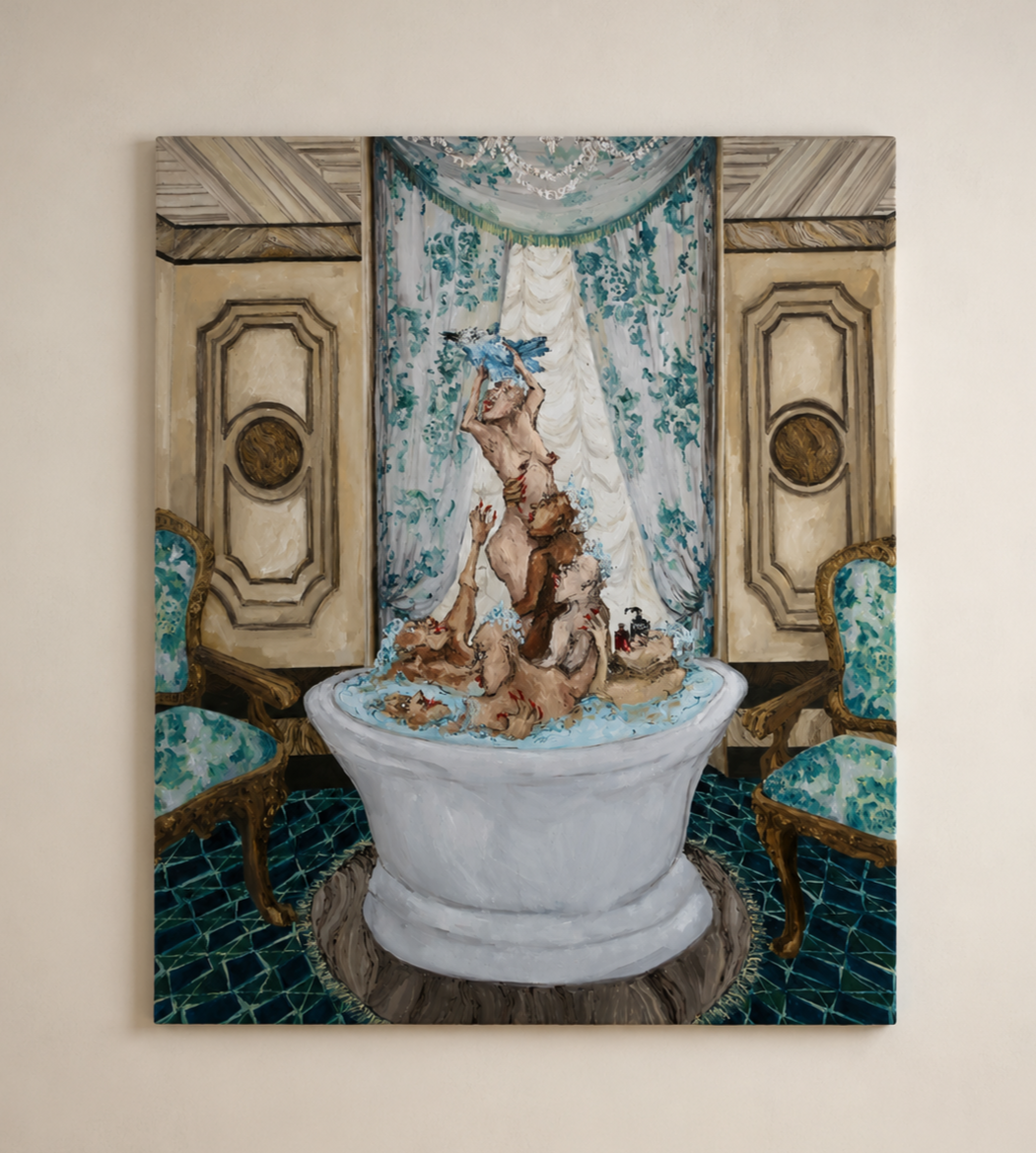
MUCKY BIRD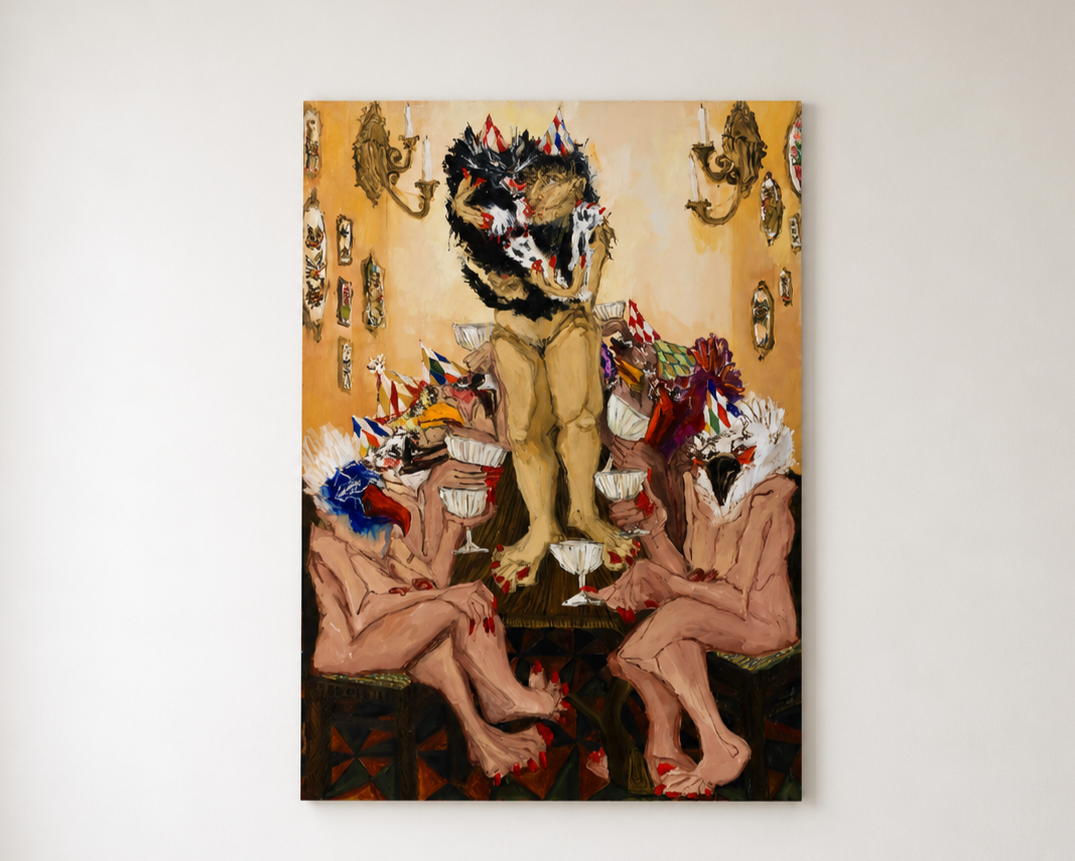
150 × 140 cm
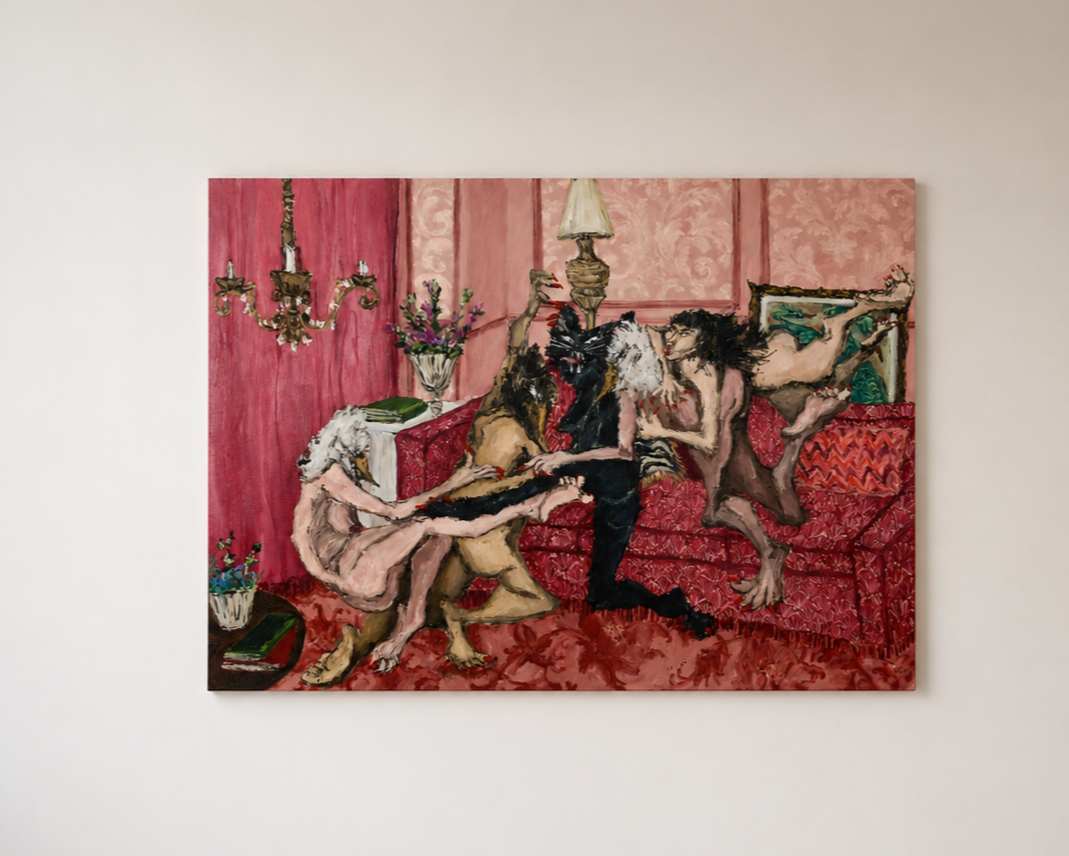
Party Birds 150 × 100 cm
Pussy Palace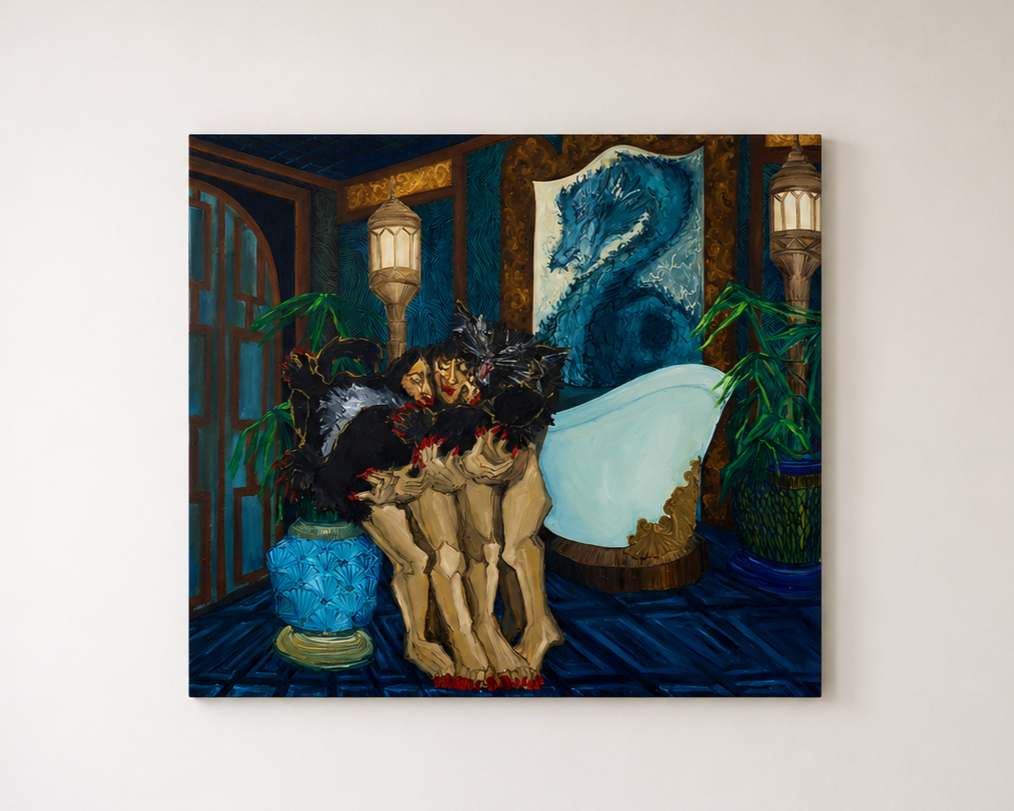
80 × 100 cm
Bowcat 180 × 160 cm
Place Setting 80 × 40 cm